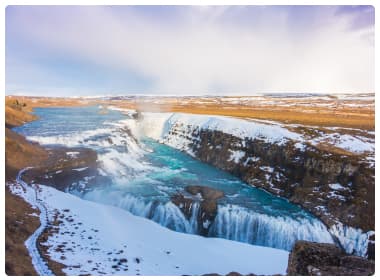
Hot and cold. These two adjectives are the synonyms of Iceland because this country is full of active volcanoes and huge glaciers. Iceland has been actively attracting tourists over the last several years. After a short visit to this country, some of them even decide to immigrate to this country. People are moving to Iceland from the USA, Canada, Australia, Germany, and some other states of the European Union. Why are they doing this? We will explain everything in this article and tell you why it is worth moving to Iceland and start a new life there. It will be so simple because Eurosender offers cheap and fast services for international removals to Iceland.
When relocating from the USA to Iceland or moving your personal belongings from abroad, consider using reliable services for international removals to Iceland. Planning a move could be really exhausting as you need to take care of your documents and get ready for moving houses. Before moving to Iceland, it is better to plan your relocation in advance. If you have excess baggage or multiple suitcases, take advantage of international removals to Iceland provided by Eurosender.
For more information about international removals to Iceland, contact our experienced logistics specialists who have already helped hundreds of our customers to move house.
Your journey starts when you get ready for relocating to Iceland by examining basic facts about this country. Find essential and interesting information about Iceland in this section and in-depth investigation of the country, including lifestyle and culture, healthcare system, and visa requirements in further sections of this article.
| Location | Iceland occupies the entire island in the Atlantic Ocean. It is located between Greenland and the British Isles. |
| Capital city | Reykjavik |
| Climate | The climate of Iceland's coast is subarctic. The Gulf Stream ensures higher annual temperatures than in other places of similar latitude. |
| Currency | Icelandic krona (ISK) |
| Population | There are about 330,000 people living in Iceland, 10% of whom are immigrants coming from other countries. |
| Language | The Icelandic language is official in the country. However, about 98% of citizens speak English pretty well. |
| Timezone | UTC +0 |
| Surprising fact | Iceland is the only country in the world that obtains 100% of electric energy from renewable sources. |
Living in Iceland could be a fairytale for some and a nightmare for others. Thus, it is better to do an in-depth investigation about this country, climatic conditions, and lifestyle before you immigrate to Iceland. We have asked expats who once came to live in Iceland from other parts of the world to report what they like and what they do not like about this country.
Advantages
Drawbacks
The cost of living in Iceland is not high, it is extremely high. Be ready that you will have to pay twice more for food and conventional cloth. It is also highly recommended to choose an apartment for rent or for purchase before you immigrate to Iceland because of high competition in this sector. Be aware that the rental cost of a small 1-bedroom apartment in Reykjavik will be about $1500. However, you will not have to pay too much for utility bills as Iceland uses only renewable sources of energy. Even if you get a decent salary as an expat, you might find it difficult to save money and will need to allocate financial resources properly.
Iceland is not a member of the European Union but it is in the European Economic Area, which means that there is a free movement of goods and labour force across the states in this economic zone. Thus, the citizens of the European Union and the EEA states do not need to get a visa and work permit before moving to Iceland. Other immigrants and expats coming from outside of these territories need to get a visa and residence permit.
There are 3 common types of visa expats usually apply for before relocating to Iceland from the USA, Canada, Australia, and other states.
| Visa type | Description |
|---|---|
| Work visa | You need to find a job first and sign an agreement before applying for a work visa. Iceland attracts many seasonal workers during the summer period because local citizens and residents cannot literally cope with the influx of tourists. Furthermore, highly qualified professionals in the IT field, engineering, and healthcare sectors are also in high demand. If you have a range of corresponding skills, you can enjoy better chances to find a job in Iceland. |
| Student visa | If you are accepted by one of the Icelandic universities, feel free to apply for a student visa. Citizens coming from outside of the EU and the EEA have to provide a document which proves that one has enough funds for studying and living in Iceland. |
| Family reunification visa | In case you are getting married to an Icelander or one of your close relatives is a citizen of this country, feel free to apply for this type of visa. |
Everyone who is planning to stay in Iceland for longer than 3 months needs to register at the local municipal authority and obtain kennitala (ID number/social security number). Kennitala is essential for signing a rental agreement, job contract, and opening a bank account for everyone who immigrates to Iceland.
Healthcare system in Iceland is regulated and funded by the government. Consider that there is no private sector in the healthcare system of Iceland. However, public health insurance covers hospital treatment, dental care, maternity care, emergency care, the cost of medicine, and many other clinical procedures.
Even if you are legally employed in Iceland, you will be able to get your health insurance only after six months of official residency in this country. Afterwards, expats need to register with a general practitioner (GP) in the local area. In any case, you should address a GP first and then he or she will make an appointment to a certain doctor.
Schooling is mandatory for children between 6 and 16 years old. They need to attend primary and lower secondary schools obligatorily. Meanwhile, upper secondary and higher education is not compulsory, but many students decide to obtain a degree at a university or go into vocational studies to gain skills in a certain profession. Consider that there are no tuition fees at any stage of education in Iceland.
Expats moving to Iceland with children are usually interested in international schools. There are few private schools for international students in Iceland and most of them are located in Reykjavik.
The tourist industry is booming in Iceland because the number of visitors is about 5 times higher than the population of Iceland. Thus, local citizens attract additional workforce for seasonal jobs, particularly in summer. Nevertheless, the fishing industry remains the core sector of the Icelandic economy. Iceland is also highly interested in the experts specialized in biotechnology, software development, and electrical engineering.
Expats coming to Iceland for employment purposes are supposed to pay taxes. The amount of taxes deducted depends on your salary rate:
More than 80% of local Icelanders have their own houses and dwellings. Native Icelanders either inherit a real estate property or construct new houses from scratch. If you think of the latter option after moving to Iceland, consider that you will need a special permit from local authorities for that purpose.
Before you immigrate to Iceland, you should take into account the fact that there is a high competition for the apartment rental and its cost could be really high. For instance, a small studio apartment in Reykjavik might be about $1500 per month. You can check the website for long-term rentals in Iceland here. If you prefer buying a house, check this website.
After relocation, you will need to think of transportation, especially when your place of residence will be far from Reykjavik. The public transport system is functioning in the capital of Iceland, but there are a few options to navigate across the country. Thus, a car might the best option for you.
Unlike conventional cities on the continent, driving in Iceland requires one to be extremely careful and vigilant. Here is the list of the basic rules for driving in Iceland.
| What? | Why? |
|---|---|
| Do not stop on the side of the road | As a rule, there is one lane in each direction, which means that the roads are narrow in Iceland. If you stop on the side of the road, it might be dangerous for you and for other road users. |
| Do not drive off the road | If you want to explore divine natural spots, off-road driving could be an option. However, it is not recommended to do so because it could be harmful to nature and dangerous for you. Remember that Iceland is full of geysers so you can run over them by accident. |
| Keep your seatbelts on | It is a basic safety rule. |
| Keep your headlights on | The weather is changeable in Iceland. It may suddenly become too cloudy, gloomy, and rainy. When you keep your headlights on, other drivers and road users will notice you. |
| Be cautious | While driving in Iceland, you need to be very attentive and cautious because there are hazards on the road. For instance, sheep can sit on the roadside on even cross a highway. |
| Do not go over speed limits | Note that speed cameras are installed all over Iceland. If you drive more than 90km\h, then a camera or a police officer might detect you. The fines for going over speed limits while driving in Iceland could be over $1000. |
| Fuel up at every chance possible | There are not as many fuel stations across Iceland as you might think. Thus, keep your fuel tank full. |
| Check road.is each time you go on a ride | This website is very convenient because it reports the current situation on the roads all over Iceland. |
For more tips about driving in Iceland, check a detailed video here.
Before relocation, one certainly wants to estimate the cost of moving house to Iceland or find out the cheapest way to move furniture to Iceland. People relocating from the USA, Canada, and Australia would like to know how much is shipping from the USA to Iceland. Luckily, you do not have to worry about that any longer as Eurosender will offer lower than the average moving costs to Iceland for everyone.
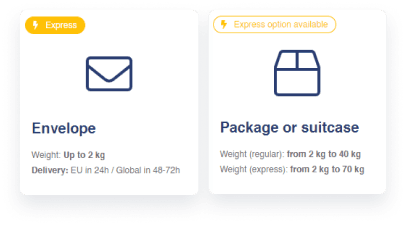
Before you place an order, take dimensions of your parcel and insert them into the Shipment Size Checker to determine which type of shipping services is the most applicable for you.
In case you have oversized or heavy packages, contact our logistics professionals: they will make an individual offer for you and provide the most affordable cost of moving house to Iceland.
Iceland is a great place to plunge into divine nature and enjoy a moderate pace of life. Expats who plan to relocate to Iceland usually look for affordable solutions to move their personal belongings, suitcases, furniture, musical instruments, and even household goods. As Eurosender partners with the most renowned shipping companies in Europe, your packages or suitcases can be safely delivered in Iceland. Thus, you will save time and money when moving to Iceland from Germany.
Iceland is a popular destination for tourists and expats coming from Canada. If you are planning to stay in Iceland for longer, we offer an effective solution to transport all your suitcases and packages. Moving to Iceland from Canada would be a bed of roses due to the cheapest way to move furniture to Iceland and appealing moving costs.
International courier services provided by Eurosender could be the best choice for moving to Iceland from Australia. You can choose our platform to get multiple quotes and make a simulation of average moving costs to Iceland. If your items are bulky or oddly shaped, you can send us a request and we will prepare a tailored offer based on your peculiar needs.
Disclaimer: The materials provided in this article were collected from other credible resources to be used for general information purposes only. Given that the legislative basis of the country and its economic development have a changing nature, the information provided in the article could be subject to change. Whilst we endeavour to keep the information up-to-date and correct, Eurosender will not be liable for any inappropriate, incomplete, or inaccurate information. Certain links will lead to websites which are not under control of Eurosender. Thus, Eurosender accepts no liability in respect of materials, products or services being not under control of Eurosender.