CIP Incoterms 2020: costs and insurance coverage
CIP (Carriage and Insurance Paid To) is one of the 11 terms created by the ICC to standardise and ease international trade. The CIP Incoterm from 2020 can be used for all modes of transport and multimodal operations. Read more about Carriage and Insurance Paid to Incoterm definition, seller’s and buyer’s responsibilities and learn how to use CIP trade terms when shipping freight.
Find the best solution for your cargo shipping needs.
CIP Incoterm definition and use for land, air and sea cargo
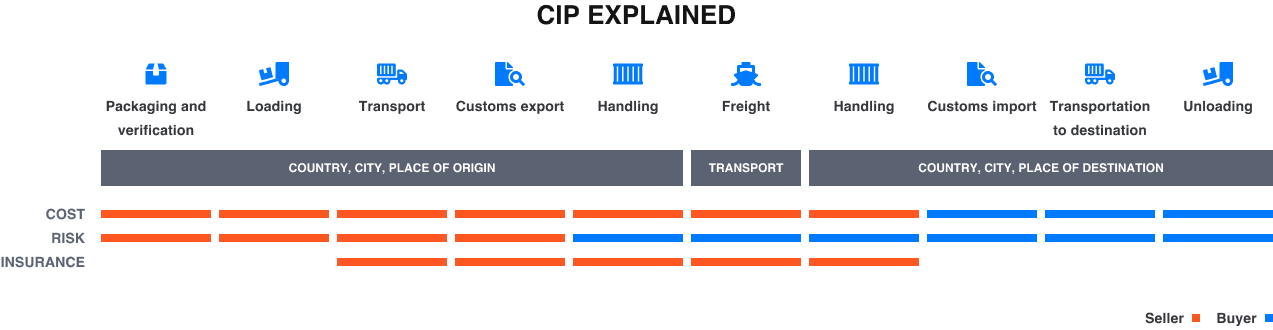
When using CIP delivery terms for export or import, the seller must arrange and pay for transport and insurance to a designated location agreed upon between the seller and buyer. This address is usually a port, hub, warehouse or any other place in the destination country.
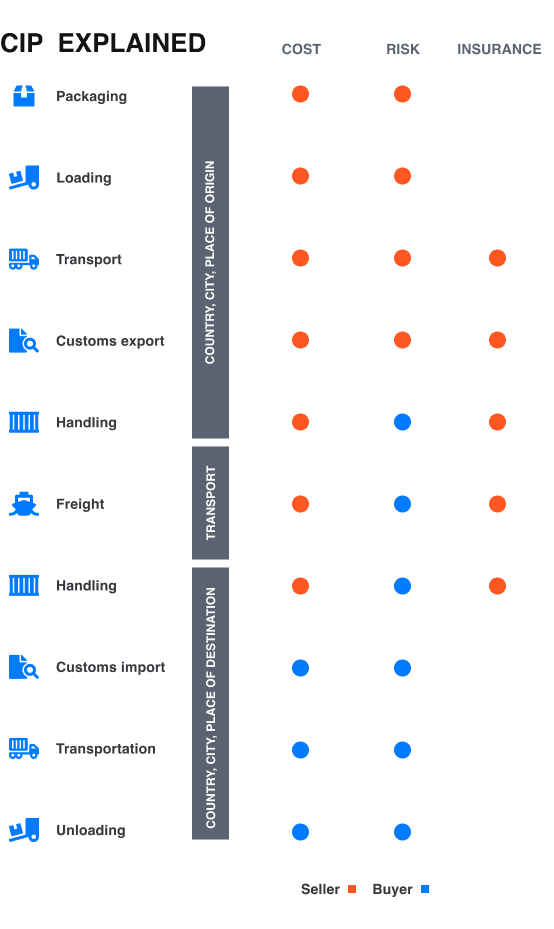
Under CIP shipping terms, the seller must pay for all domestic and international freight charges until the cargo reaches the previously designated location. However, when using CIP shipping terms, the risk for the goods transfers from seller to buyer once the first carrier takes hold of them at the place of shipment and not the place of the destination.
The 2020 CIP Incoterm can be used for all modes of transport and is specially indicated for container cargo.
Seller’s vs buyer’s obligations under the CIP Incoterm
Seller’s responsibilities under CIP shipping terms
Under CIP freight terms, the seller is responsible and pays for:
- Packing the goods and reading them for inspection
- Export clearance, duties, taxes, permits and documentation at the country of origin
- Loading and terminal handling charges
- Freight transport until the designated location
- All–risk insurance coverage for the goods
Buyer’s responsibilities when using CIP freight terms
- Import formalities and duties, taxes, documentation and costs, including VAT
- Transport of the goods and last-mile deliveries from the designated location to any other place

INSURANCE
CIP Incoterms 2020: insurance and coverage
One of the main points of Carriage and Insurance Paid To Incoterms is that the seller is obligated to purchase insurance for the cargo. Usually, the CIP insurance coverage is included in the final CIP invoice. Sellers are obligated to buy only basic insurance, which is usually 110% of the commercial value of the goods and should be included in the CIP price. Since the risk of the goods transfers from the seller to the buyer the moment the goods are loaded onto the first carrier, buyers are often advised to purchase additional insurance when using CIP freight terms. This is especially important for manufactured or high-value goods, such as electronics.

SHIPPING COSTS
CIP price: Who pays for CIP shipping?
Following the CIP Incoterm definition, it would be easy to assume CIP freight terms mean freight costs covered. However, using Carriage and Insurance Paid to Incoterms only implies that the CIP price already includes the freight charges to the designated location.
For example, an Irish company sells 100k units of merchandise to a US buyer using the 2020 CIP Incoterm. The US company names its warehouse at the port of New York as the designated location.
- The Irish company books transport of the goods from their premises in Dublin to the port of destination in the US. Following CIP terms, they also purchase the minimum amount of insurance for the goods.
- Then the Irish company packs the goods for export and loads them on the trucks of the first carrier. At this moment, the goods are considered delivered and the risk transfers from the seller to the buyer.
- The goods reach the Irish port and are handed over to a sea carrier, paid for by the seller.
- Once the goods reach the port of destination in the US, the buyer gets them cleared for import in the US.
- The seller pays to unload the goods at the seller’s warehouse in NY.
- The US company arranges and pays for any transportation cost from the warehouse in New York to any other location or address.
See other Incoterms for international transport
CIP CUSTOMS CLEARANCE
CIP customs in export and import
CIP customs regulations indicate that the seller must cover all CIP export costs at the country of origin. They have to prepare the goods for inspection and cover all export duties, taxes, permits and documentation for the cargo. They are also obligated to help the buyer with import formalities by providing all the information and documents they might need. When using CIP in export, sellers are also responsible for covering terminal handling charges at the port of origin.
Buyers importing with the 2020 CIP Incoterm have to cover all import charges, customs duties and taxes at the country of destination, including VAT. Under CIP import terms, the buyer is liable for the cargo when it is loaded on the first carrier’s vehicles. More about freight customs
Ship your cargo with a reliable freight forwarder
Join the digital logistics world and access a vast network of vetted freight forwarders. At Eurosender, we collaborate with reliable cargo transport companies and international carriers and will connect you to the provider that best suits your needs. Our team of experts will act as an intermediary on your behalf to organise every detail of the shipping service.

NEED MORE INFORMATION?
