FAS Incoterms 2020: Free Alongside Ship for export and import
The Incoterm FAS, initials for Free Alongside Ship, is one of the Incoterms for maritime freight defined by the ICC in 2020. The FAS shipping term determines who is responsible for transporting the goods and clearing them for transport. Learn what Free Alongside Ship means in shipping and the responsibilities of seller and buyer when using the Free Alongside Ship Incoterm for exporting or importing goods by sea.
Find the best solution for your cargo shipping needs.
Free Alongside Ship: FAS Incoterm definition and use
The Incoterm FAS or Free Alongside Ship means that the seller is obliged to get the goods cleared for export, packed and ready for loading onto the vessel at the port of origin. Following FAS shipping terms, the buyer must pay for the loading services and the freight transport.
Unlike other Incoterms, under the FAS shipping term, neither seller nor buyer is obliged to add insurance coverage to the cargo, although it is always advised.
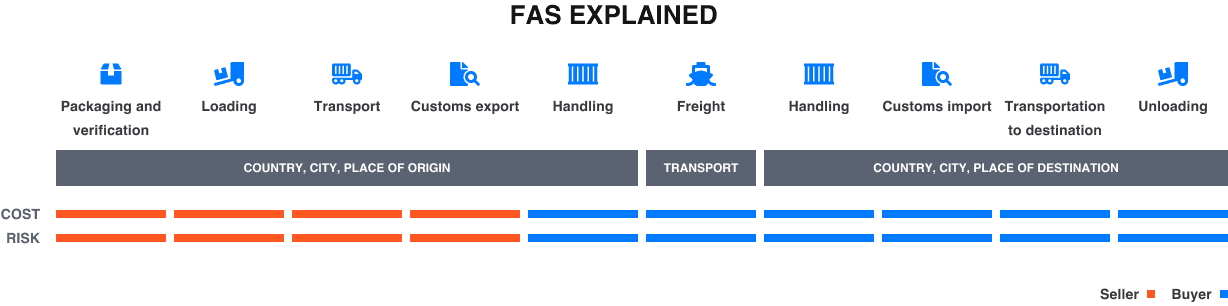
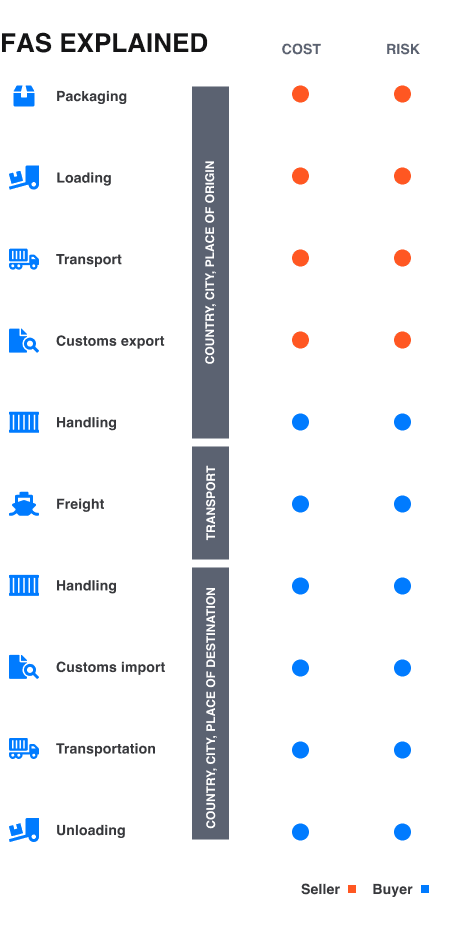
Responsibilities of seller and buyer when using the FAS shipping terms
Seller’s responsibilities when using Free Alongside Ship or FAS Incoterm
- Packing and wrapping the goods for transport.
- Domestic transport from the warehouse to the port of origin.
- Clearing the goods for export.
- Leaving the goods directly next to the selected vessel.
- The goods must be packed according to the buyer’s specifications so they can be loaded onto the vessel.
When using FAS shipping terms, the buyer is responsible for:
- Loading the goods on the selected vessel.
- Paying for all international transportation costs.
- Unloading and Terminal Handling Charges (THC) at the port of destination.
- Import clearance procedures.
- Domestic transport on the country of destination.
See other Incoterms for international shipping


INSURANCE COVERAGE
Who pays for insurance with the FAS shipping Incoterm?
In FAS / Free Alongside Ship, neither the seller nor the buyer has an obligation to purchase insurance for the cargo.
When shipping sea cargo under the delivery term FAS, the seller is only responsible for the goods until they reach the loading dock next to the selected vessel and is not obliged to insure the cargo. Because the buyer is liable for the cargo once it is left alongside the vessel, they are advised to add insurance coverage.

SHIPPING COSTS
Shipping costs when using the FAS Incoterm in 2020
When using the Free Alongside Ship for shipping cargo, the seller is responsible for arranging transport, getting the goods to the port, and leaving them properly packed within reach of the ship lifting and loading structures (i.e. loading crane or lifting tackle).
Under the FAS Incoterm, they also must pay for inland or domestic transport in the country of origin, whether by hiring a freight forwarder or delivering the cargo themselves.
From the moment the cargo is delivered at the agreed location, the buyer is responsible for paying the international maritime shipping costs, which include loading and unloading.
For example: a company in Ireland (the seller) sells 100,000 units of merchandise to an American company (the buyer) under FAS terms. In this situation, the following responsibilities are applicable:
- The Irish company clears the goods for export in Ireland, packs them properly and transports the goods from their premises to the port of origin.
- In the port of origin, the seller pays for Terminal Handling Charges (THC) at the origin and leaves the cargo packed and ready to be loaded.
- From this moment on, the buyer is responsible for the cargo and is obliged to pay for loading, all freight costs and the THC at the port of destination.
- The buyer must also clear the goods for transport.
CUSTOMS CLEARANCE
FAS customs in export: Who pays for customs clearance when using the FAS shipping Incoterm?
Following the Free Alongside Ship Incoterm in 2020 definition, the seller is responsible for clearing the goods for FAS export, as well as paying any export fees and preparing the necessary documentation.
The buyer must clear the goods for import at the country of destination. The buyer is also responsible for providing the required documents and permits to import the goods. This is a significant change from the previous version that was added to the FAS Incoterm in 2020. Read more about the customs procedures for freight shipments.
Ship your cargo with a reliable freight forwarder
Join the world of digital logistics and get access to a vast network of vetted freight forwarders. At Eurosender, we collaborate with reliable cargo transport companies and international carriers and will connect you to the provider that best suits your needs. Our team of experts will act as an intermediary on your behalf to organise every detail of the shipping service.
Get in touch with an expert

NEED MORE INFORMATION?
