How to load pallets on a truck?
Before starting to load or unload pallets from a truck, make sure that the vehicle has come to a complete stop on firm and level ground. The brakes should be applied, and there should be sufficient space to access the vehicle on both sides to move the pallets. There are three main methods used for loading pallets on a truck:
1)Side-by-side loading
As the name suggests, the pallets are loaded next to one another with the jack or forklift openings on the short end of the pallets facing backwards and forwards. While this method is not the most efficient in terms of how much space is used, side-by-side loading is the fastest way to load and unload pallets, saving lots of time.
2)Turned loading
This method is the opposite of side-by-side loading. Pallets are placed on the truck in a way that sees the long end of each pallet facing forwards and backwards, and the jack or forklift openings facing sideways. Turned loading takes up less space than side-by-side loading, meaning more pallets can be loaded at once. It also provides more protection for the goods stored on each pallet as there is less room for shifting and sliding to occur during transit. The disadvantage, however, is that not every vehicle has enough space to accommodate the turned loading method, while loading and unloading from the rear can also be more challenging.
3)Pinwheeled loading
This method combines side-by-side and turned loading. When using the pinwheeled loading method, every other pallet is loaded on the truck in a different direction. This is the best method to use if you do not have a trailer that is big enough to turn the load. In the end, whichever method you use, you need to make sure that every pallet is inspected for any signs of damage and/or weakness before loading, and thorough calculations must be made to ensure that you do not exceed the load and weight limits. Using a pallet truck with scales is an efficient solution for this.
Should I use lashings when loading pallets on a truck?
Lashings are required if there is too much space between pallets. This will prevent the pallets from sliding during transport and is particularly important when using a rough terrain pallet truck that may shift unsecured goods.
How do I unload pallets from a truck?
The pallet should be unloaded from the truck in the exact reverse way that it was loaded. In other words, unload the pallets alternating from side to side (if you used the side-to-side loading method) beginning at the rear of the vehicle. Please note that you may also need to support the front of the truck if there is no tractor unit attached to it.
Who will load and unload the pallets when shipping via Eurosender?
There are different loading and unloading procedures for different services.
In groupage transport, the driver normally brings equipment and does the loading and unloading, however this is not always guaranteed. Please check with our team when booking the service as there may be exceptions on your route.
For other options such as Van Delivery, LTL and FTL transport, it is your responsibility to load and unload the cargo. This can be done with a forklift, by hand, or another method of your choice.
How do I unload a pallet without a forklift?
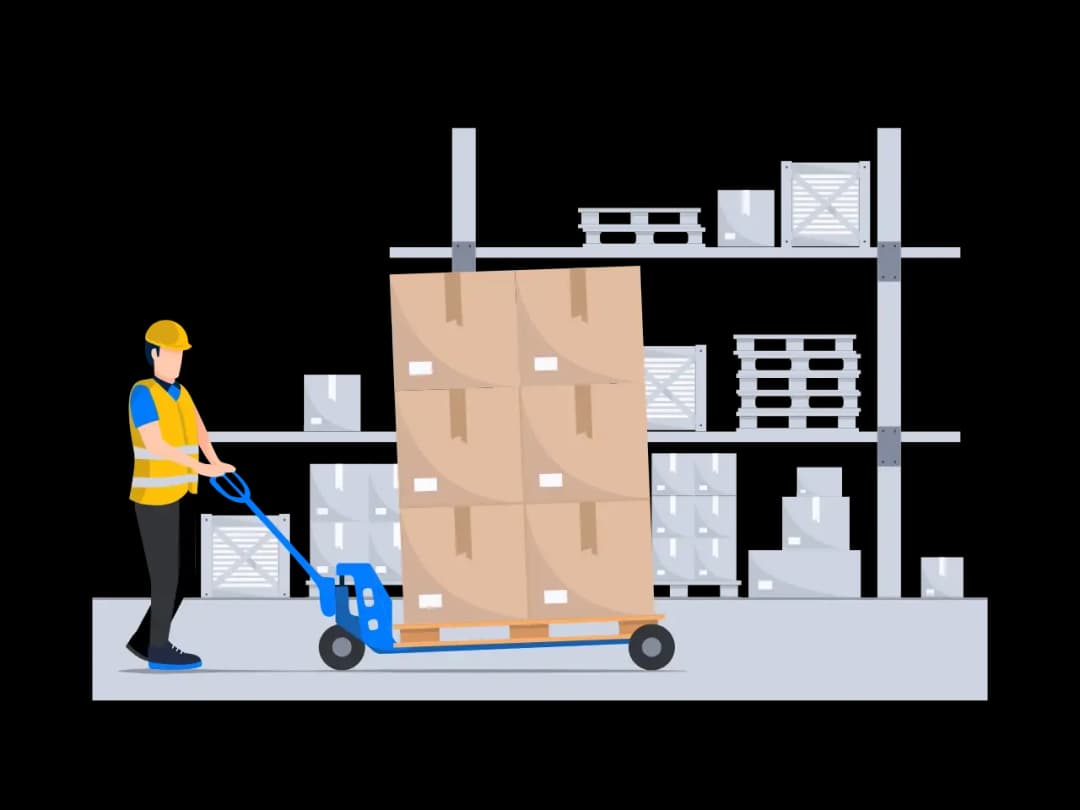
If there is no forklift available on site to unload your pallet, you can use the following methods:
- •
Manual pallet jack – cheaper and durable, can lift 1,000-2,000 kg;
- •
Electric pallet jack – like a manual jack but with a motor;
- •
Walkie stacker – a larger electric jack, usually ride-on;
- •
Breaking freight and unloading by hand.
Can I book a tail-lift or other equipment for pallet loading and unloading?
This depends on the specific service. When placing your order, please specify your requirements, and we will make the arrangements with the carrier on your behalf. See how pallet loading and unloading works in our services below:
- Groupage: this service usually includes a tail-lift (at no additional cost) but please make sure to mention it in your request anyway.
- Van Delivery: you can book tail-lift equipment or other loading assistance for an additional fee when placing your order.
- Full truckload: there is no tail-lift option available for this service. Please use one of the two services above if you do not have the necessary equipment to load and unload the shipment yourself.
Read more about tail-lift deliveries
How many pallets can be loaded in a full truck?
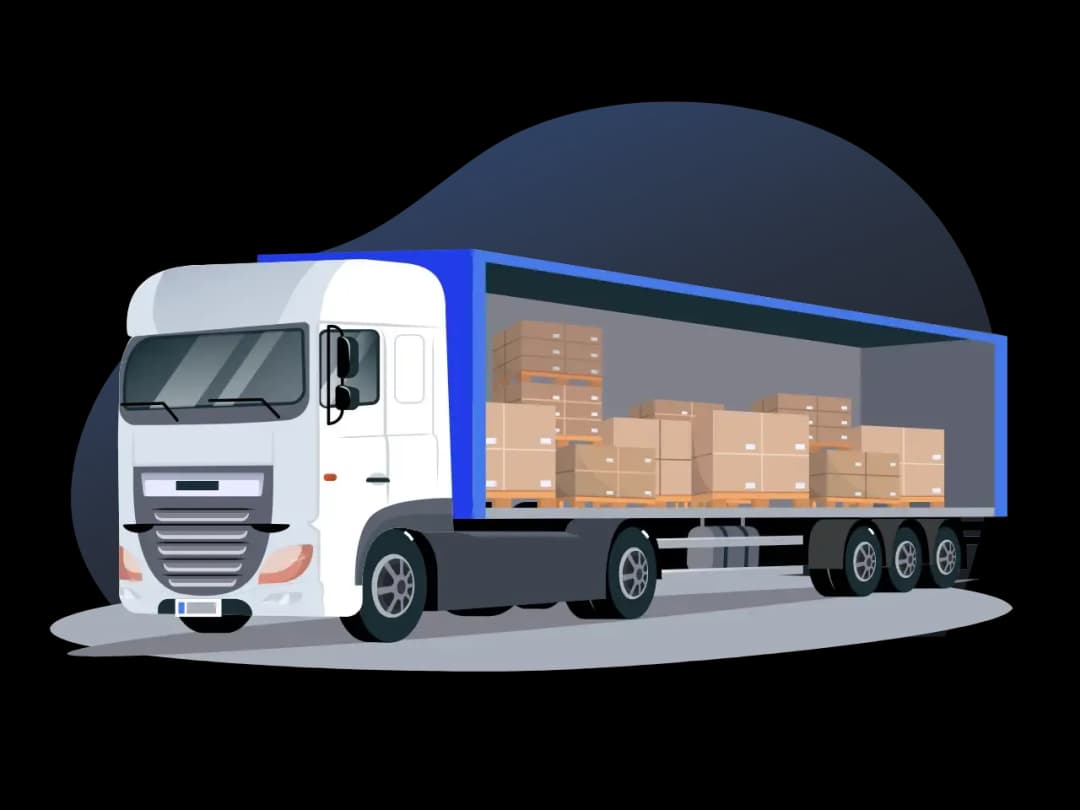
The number of pallets that can be loaded in a full truck depends on the size of vehicle used and the type of pallets being loaded (UK and Euro pallets differ in size).
In the UK, a standard flat 13.6 m trailer can carry 26 UK pallets (13 on each side), loaded using the turned method. This same type of truck can carry 33 loaded Euro pallets (15 turned pallets on each side, as well as an additional three pallets side by side across the back).
For FTL shipping with Eurosender, our carrier partners use tandem trucks and semi-trailers. 34 or 38 pallets (floor spaces) can be loaded in each truck respectively.